2026 Wimbledon Women’s Futures: Four Players I Believe Can Win the Title
Every year, I tell myself not to overreact to the grass season.
And every year, I end up changing my mind on somebody.
That’s the challenge with Wimbledon. The sample size is tiny. Most players only get a handful of matches before the tournament starts, so it’s easy to chase results that disappear a week later.
I’ve been coaching long enough to know that’s a dangerous way to evaluate players.
Instead, I keep coming back to the same questions.
Does this player’s game actually fit grass? Are they controlling matches or just surviving them? And if the score gets tight in the second week, whose style do I trust?
Dominance Ratio and return points won don’t answer every question, but they’ve helped me avoid falling in love with flashy wins that don’t mean much. Sometimes a player wins three matches and never really controls any of them.
Other times, someone loses a close quarterfinal but plays the kind of tennis that tells you they’re close to a breakthrough.
That’s the lens I used this year.
🎾 Level Up Your Tennis Game
Before you dive into today’s story, get the best insights, odds, and rankings on the web:
- 📈 The Big Board: Phil Naessens ATP & WTA Power Rankings by Surface
- 📬 Stay In The Loop: Subscribe to the Crush & Rush Tennis Newsletter on Substack
- 📰 The Latest Scoop: Catch up on breaking action at Crush & Rush Tennis News
- 💰 Smart Money: Get the edge with Crush & Rush Tennis Betting Insights
Elena Rybakina
I kept trying to talk myself out of picking Elena Rybakina.
The recent grass results haven’t been overwhelming, and younger players are arriving with more momentum.
But every time I went back through the numbers, I ended up in the same place.
She’s 23-5 at Wimbledon.
She’s won the tournament, reached another semifinal, another quarterfinal, and still owns one of the cleanest service games in women’s tennis.
Her 1.14 Dominance Ratio this grass season isn’t spectacular. It’s simply another piece of evidence that the foundation is still there.
Sometimes we spend so much time looking for the next champion that we overlook the player who’s already proven she knows exactly how to win this event.
Aryna Sabalenka
Aryna Sabalenka was probably the player I debated the longest.
The power is obvious. It always has been.
What I wasn’t sure about was whether her grass numbers justified putting her ahead of some other names.
A 1.13 Dominance Ratio isn’t miles ahead of the field. A 7-2 grass record is excellent, but not untouchable.
Then I reminded myself that Wimbledon isn’t played on a spreadsheet.
It’s played by players who can make opponents feel rushed, uncomfortable, and defensive from the opening game.
Sabalenka still does that as well as anyone.
I do think her draw matters. More than it does for Rybakina, anyway. There are certain styles I’d rather avoid if I were in her camp.
But if she gets into rhythm early, I wouldn’t be surprised if she’s playing for the title.
Jessica Pegula
Jessica Pegula might be the player I’ve changed my opinion on the most over the last few years.
If you only look at Wimbledon, it’s hard to make the case.
If you only look at Berlin and Bad Homburg, it’s hard not to.
That’s the tradeoff.
She’s won some of the biggest grass lead-up events on the calendar, beaten elite players on the surface, and reached another Berlin final this year.
Yet Wimbledon itself hasn’t rewarded her the same way.
I don’t have a perfect explanation for that.
Maybe it’s bad timing. Maybe it’s matchups. Maybe it’s just the strange nature of a tournament where one off day sends you home.
What I do know is this: players don’t accidentally keep beating Sabalenka, Swiatek, Keys, and Noskova on grass.
Eventually, that has to matter.
Madison Keys
I’ve always liked watching players whose strengths become even stronger on grass.
Madison Keys fits that description perfectly.
She’s never going to grind opponents into submission.
She’s trying to shorten points before they ever become rallies.
When that first serve lands and the forehand follows it, you can almost see opponents backing up half a step because they know what’s coming.
Of course, there’s a tradeoff.
That style also means there are days when the timing disappears, and the errors pile up.
That’s always been the bargain with Madison Keys.
But if you’re asking me who can put together seven explosive performances on grass, she belongs on the shortlist.
Don’t Miss a Single Serve!
Get deep-dive tennis analysis delivered straight to your inbox.
Join the Crush & Rush NewsletterFour Players I Like to Make a Deep Run
This group was actually easier to put together.
Not because they’re better players.
Because each one gives me a different reason to believe.
Linda Noskova
Winning Berlin changed the conversation.
Before that tournament, I thought Linda Noskova was close.
Now I think she’s arrived.
A 1.31 Dominance Ratio doesn’t happen by accident.
That’s a player controlling matches instead of hanging around in them.
Emma Navarro
Every tournament has someone who quietly keeps solving problems.
That’s Emma Navarro.
She doesn’t overwhelm you physically.
She doesn’t have the biggest serve.
Then you look up two hours later, and she’s won another match.
I’ve always appreciated players like that because they’re difficult to prepare for.
They make adjustments.
They don’t panic.
Alexandra Eala
This one is more instinct than certainty.
The Dominance Ratio says Alexandra Eala is still developing.
The wins say something different.
When you beat Elena Rybakina and Elina Svitolina on grass, I stop thinking about potential and start thinking about possibility.
Is she ready to win Wimbledon?
Probably not.
Could she ruin somebody else’s tournament?
Absolutely.
Zeynep Sönmez
This is the one I keep coming back to.
Maybe I’m wrong.
We’ll find out soon enough.
But winning 45.7 percent of return points on grass isn’t normal.
That’s the number that made me stop and look deeper.
Zeynep Sonmez isn’t blowing people away with her serve.
She isn’t hitting ten aces a match.
She’s making opponents work for every service game, and that’s a skill that tends to become more valuable as a tournament goes on.
I’ve coached enough tennis to know how frustrating those players are to face.
They don’t let you breathe.
And sometimes that’s more dangerous than having the biggest serve in the draw.
Final Thoughts
The draw will change some of these opinions.
It always does.
Maybe Rybakina lands in a brutal quarter.
Maybe Pegula finally gets the Wimbledon draw she’s been waiting for.
Maybe Sönmez runs into a top server in the first round and never gets the chance to build momentum.
That’s part of the fun.
Predictions aren’t about pretending you know what’s going to happen.
They’re about making the best argument you can before the first ball is struck.
These are the four players I trust the most to win the title.
And these are the four others I’ll be watching very closely once the draw comes out.
News Hub

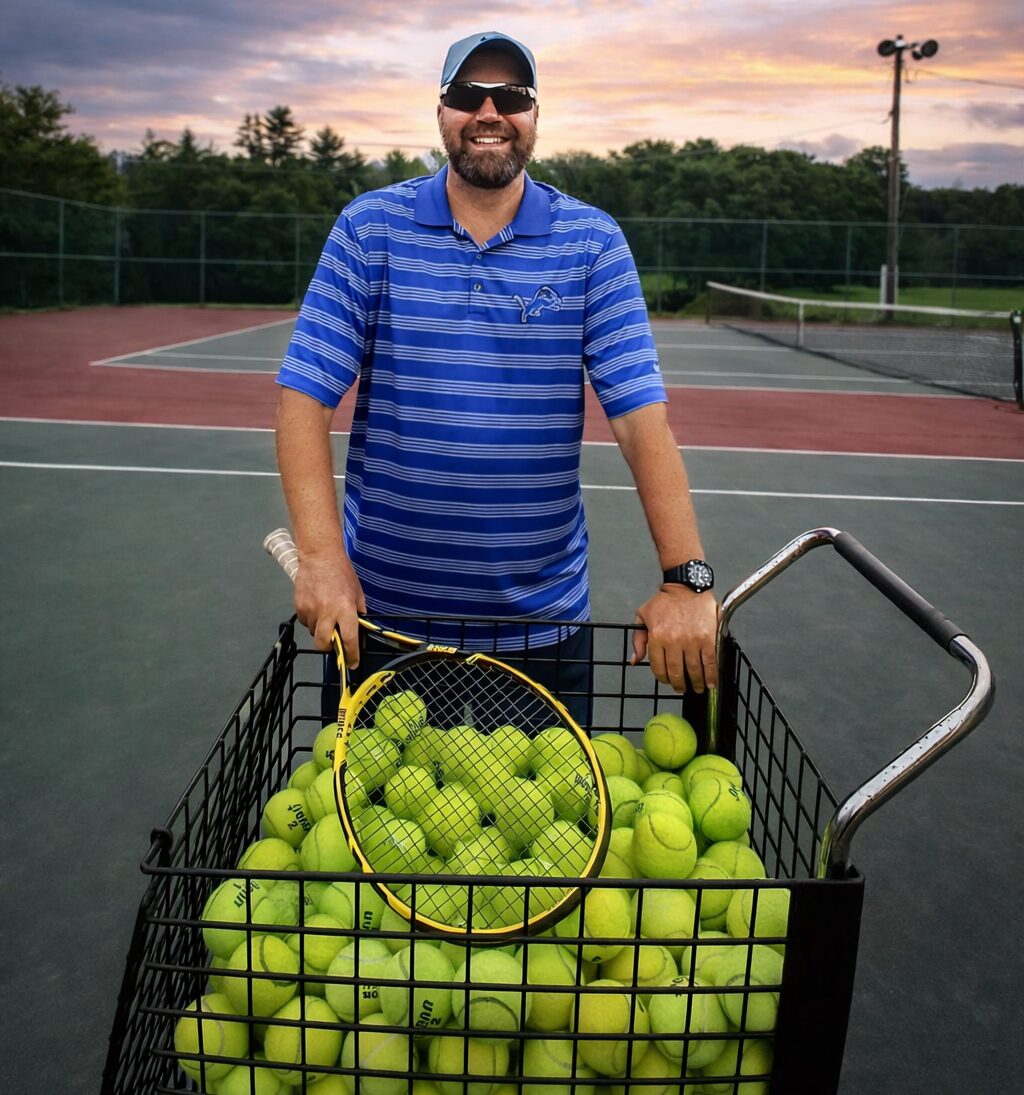
Phil Naessens has spent decades in sports as a broadcaster, author, journalist, professional tennis coach, and betting analyst. As the founder and editor of Crush & Rush News and host of the Crush & Rush Tennis Podcast, he combines firsthand coaching experience with years of sports media and publishing to deliver thoughtful tennis analysis, tournament coverage, player features, and transparent betting insights built around value, and not hype.