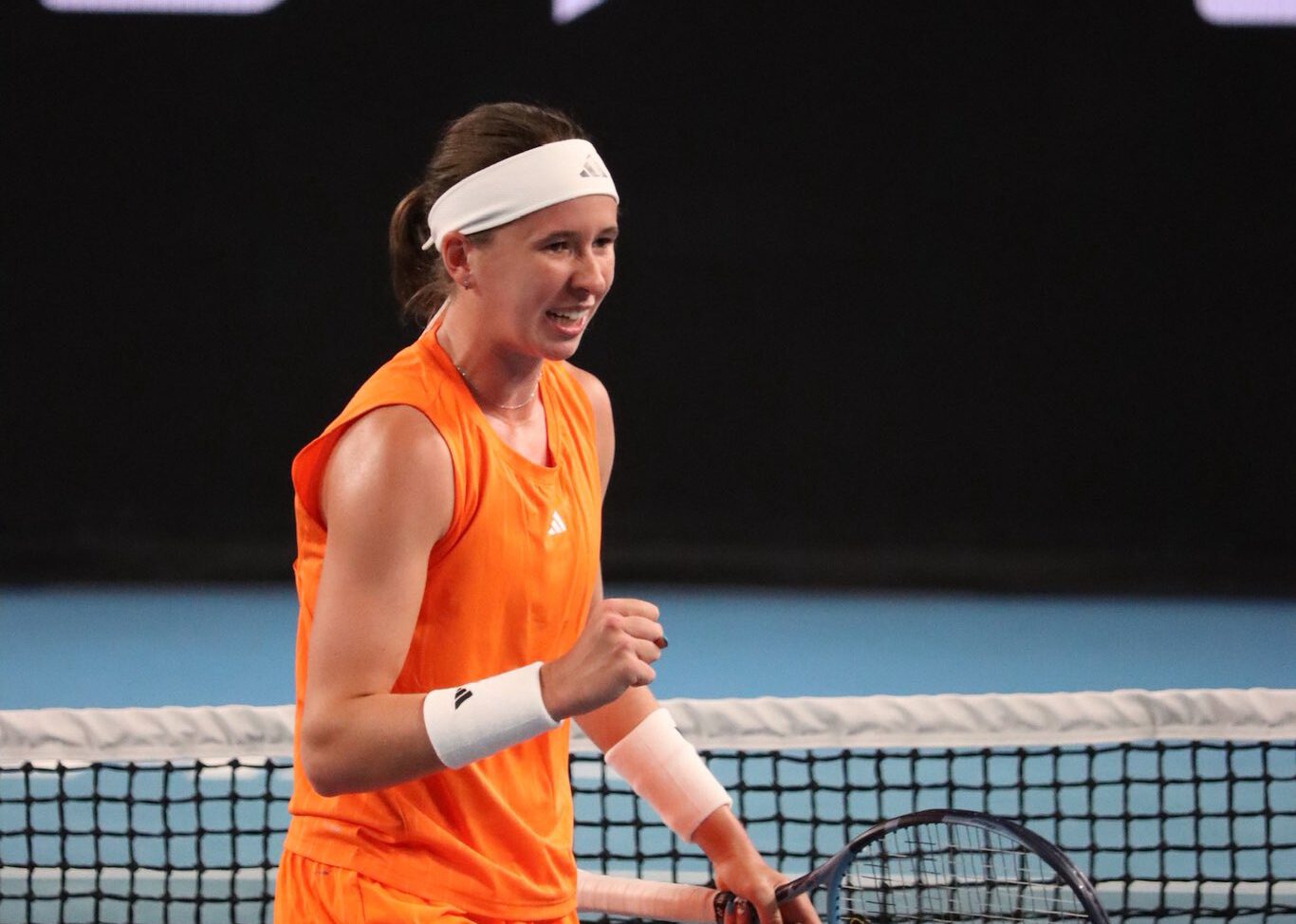
Emma Raducanu lost again, and by now the result itself barely registers.
What matters is the pattern. She has not truly clicked since September 2021, and four-plus years on, the gap between reputation and reality keeps widening.
That US Open title was not the launchpad everyone assumed.
It was an outlier, a perfect storm of freedom, rhythm, and elite returning plus a TON of luck that never reappeared in sustained form.
What the results keep telling us
- Early losses look different on paper, but identical on court
- Competitive first sets, fading margins, no Plan B
- Service games that do not apply pressure
- Points ending on impatience rather than structure
This is not about nerves anymore.
It is about identity, and this girl doesn’t have the foggiest idea what she is doing on court.
The skipped years
Most players grind through ages 19 to 22 building ugly wins, learning patterns, losing matches they should not, and slowly sharpening weapons.
Emma Raducanu skipped that phase and declined several WTA 1000 wild cards during her many “returns” to the game.
She’s had more coaches than titles, and has seemingly learned nothing in the 4+ years since her lucky run in Flushing turned her into a star she probably wasn’t mature enough to handle.
The technical ceiling right now
- Serve: Functional, not threatening
- Forehand: Clean when confident, leaky under pressure
- Return: Still her best asset, but not enough to carry matches
- Point construction: Commits early without finishing patterns
Against disciplined tour-level opponents, that profile does not hold.
The uncomfortable truth
Raducanu is no longer losing because opponents are playing out of their minds. She is losing because they are more complete.
- They protect serve better.
- They defend one extra ball.
- They know exactly who they are.
Until Raducanu commits to a single, repeatable game plan and plays enough matches to own it, these losses will keep recycling.
Reality check
This is not a write-off, but right now, she is a confused tennis player running in circles. The tools are still there, but the direction is not.
Without a clear identity or repeatable patterns, effort replaces structure and movement replaces progress.
Betting context, Crush & Rush note
Raducanu matches remain name-driven traps. The market still prices upside that has not existed in years. Until there is evidence of sustained form, not flashes, caution is mandatory.
This is not a write-off.
It is a reality check.
Talent did not disappear.
But the clock is no longer paused.

For Further Reading
Favorites vs Underdogs — The Big Picture
WTA betting markets consistently reward underdogs more than favorites, especially at short prices. High win percentages often mask poor returns, while lesser-known players quietly generate long-term value.
This section focuses on:
- why win rate does not equal profitability
- where favorites consistently burn units
- how underdogs outperform expectations over full seasons
- Top 25 WTA Underdog Performers — Overall Net Profit (Full Season)
- Best WTA Top 10 Players to Bet On: Who Makes Money for Bettors — and Who Burns It
Together, these results show why WTA betting success is driven more by price discipline and volatility management than by backing the most prominent names.
The WTA Star Tax (Short-Price Reality)
Elite WTA players win a lot of matches — but bettors often overpay for those wins. The “Star Tax” refers to inflated prices driven by reputation, particularly at Grand Slams and early rounds.
This section explains:
- why short-priced favorites (-150 and beyond) underperform
- how public perception skews pricing
- where break-even math quietly fails
The WTA Star Tax refers to the premium bettors pay for elite names, particularly at short prices where the margin for error disappears.
Biggest WTA Betting Upsets
The WTA Tour produces frequent and often extreme upsets, driven by momentum swings, fragile second serves, and matchup volatility. These results are not random — they tend to cluster in specific tournament contexts.
This section highlights:
- the largest WTA underdog wins by odds
- where markets were most wrong
- early-round versus late-round chaos
WTA upsets tend to cluster in the early rounds and at high-profile events, where pricing lags behind matchup reality and momentum swings are magnified.
Most Profitable WTA Players for Bettors
The most profitable WTA players are rarely the most famous. Consistency, pricing discipline, and matchup flexibility matter more than rankings or titles.
This section reframes success:
- from “best players” to “best bets”
- from trophies to unit performance
- from hype to sustainability
- Top 25 WTA Underdog Performers — Overall Net Profit (Full Season)
- Best WTA Top 10 Players to Bet On: Who Makes Money for Bettors — and Who Burns It
Long-term profitability on the WTA Tour is driven by pricing discipline and matchup flexibility, not rankings or title counts.
Bagels, Breadsticks & Market Volatility
Lopsided sets (6–0, 6–1) occur more frequently on the WTA Tour and often distort future pricing. These scorelines exaggerate dominance and create false certainty in subsequent matches.
This section examines:
- why blowouts mislead betting markets
- how momentum gets overvalued
- where regression hits hardest
- The WTA Oven: Top 20 Bagel and Breadstick Humiliations on the WTA Tour in 2025
Extreme score-lines exaggerate form and momentum, leading bettors to overvalue recent dominance and underestimate regression.

Phil Naessens is a tennis betting analyst and former tennis coach with decades of experience in player development and match analysis. He is the founder of Crush Rush News and host of the Crush & Rush Tennis Podcast, focusing on price-first betting strategy, market efficiency, and transparency in sports wagering.