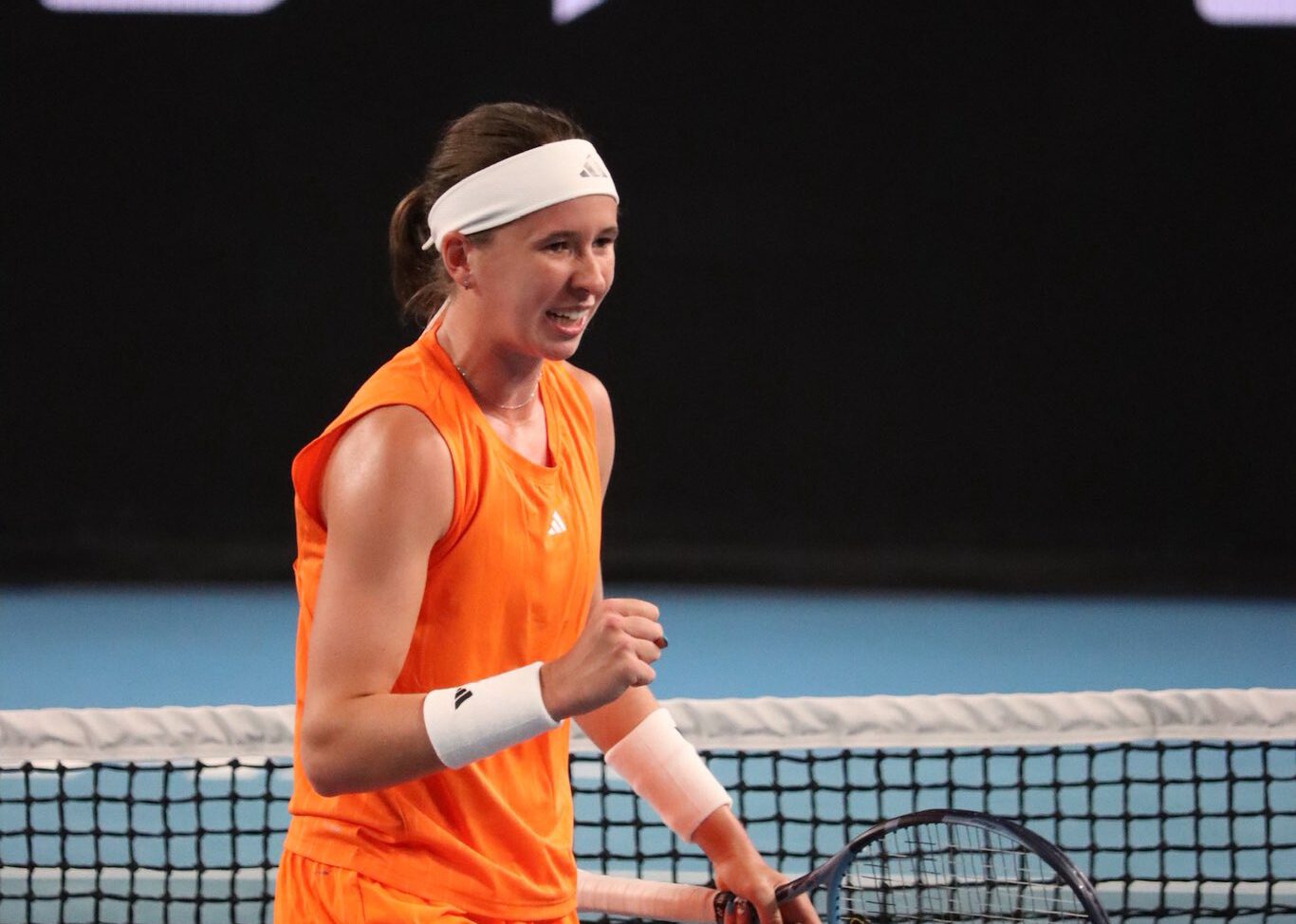
Who Is Nikola Bartůňková?
Nikola Bartůňková is one of those names that quietly live on junior and ITF scouting lists until a Grand Slam puts a spotlight on her.
At the 2026 Australian Open, the Czech teenager has turned that quiet buzz into a full-volume introduction, battling past Australian representative Daria Kasatkina in three demanding sets to earn a second-round meeting with Belinda Bencic.
Read on to find out Who Is Nikola Bartůňková?
Age, Nationality, Ranking
Bartůňková is 19 years old, born in Czechia, and entered the 2026 season ranked outside the WTA Top 150, is currently No. 124 and is on the rise.
Coaches and player-development folks have been tracking her for years, largely because her tools have always been ahead of her results.
Melbourne has been the first place where everything has lined up at once for the teenager.
What the Numbers Tell Us (Australian Open 2026)
Through qualifying and her opening main-draw win, Nikola Bartůňková has not relied on free points.
Her first-serve percentage has hovered in the low-50s, and her ace rate has remained modest.
She has consistently won a higher share of second-serve points than expected, saved break points at a respectable clip, and kept rallies mostly on her terms.
The three-set win over Daria Kasatkina stands out not for dominance, but for resilience.
Bartůňková dropped the second set 0–6, then reset quickly, steadied her shot selection, and reasserted control in the decider.
From a coaching perspective, that response matters more than the dip itself.
Young players lose sets like that all the time. Fewer recover from them immediately, and typically not against someone of Kasatkina’s pedigree.
Her ability to regroup and compete point by point speaks to maturity and match awareness beyond her ranking.
Analyzing the Matchup: Bartůňková vs Belinda Bencic
Belinda Bencic is one of the tour’s most disciplined hard-court operators. She takes the ball early, redirects pace with precision, and exposes hesitation better than almost anyone outside the very top tier.
From a tactical standpoint, Bartůňková’s challenge is time and positioning.
Against Kasatkina, she was able to extend rallies and reset points from neutral positions. Bencic does not allow that luxury.
Bencic loves to shorten exchanges by stepping inside the baseline and changing direction early, particularly off the backhand return.
If Bencic is able to do this often enough, Bartůňková is toast.
Key areas to watch
Return Depth
Bartůňková must avoid floating returns through the middle of the court. Bencic thrives on first-strike forehands off short returns. Even neutral depth is not enough here. The goal is to push Bencic back and force her to play defensively.
Second Serve Pressure
Bencic is an elite second-serve returner. Bartůňková’s second delivery has held up well so far, but this is the first opponent who will consistently attack it.
Rally Patience vs Initiative
Bartůňková’s instinct is to build points patiently. If she waits too long for the perfect ball, Bencic will take it away.
The moments when Bartůňková successfully steps forward and flattens the forehand will likely determine how competitive the match becomes.
Mental Reset Points
The 0–6 second set against Kasatkina showed both vulnerability and growth. Against Bencic, there may be similar momentum swings, but fewer chances to recover if concentration dips.
The ability to reset between games will be critical.
From a development perspective, this is an ideal measuring-stick match.
The Bigger Picture
Regardless of the result against Bencic, this Australian Open has already marked a turning point for Bartůňková.
She has shown she can absorb pressure, problem-solve mid-match, and compete physically and mentally at a Grand Slam level.
Those traits do not guarantee immediate results, but they do signal sustainability.
Breakout runs fade. Skill sets endure. Bartůňková’s performance in Melbourne suggests the latter.

Phil Naessens is a tennis betting analyst and former tennis coach with decades of experience in player development and match analysis. He is the founder of Crush Rush News and host of the Crush & Rush Tennis Podcast, focusing on price-first betting strategy, market efficiency, and transparency in sports wagering.