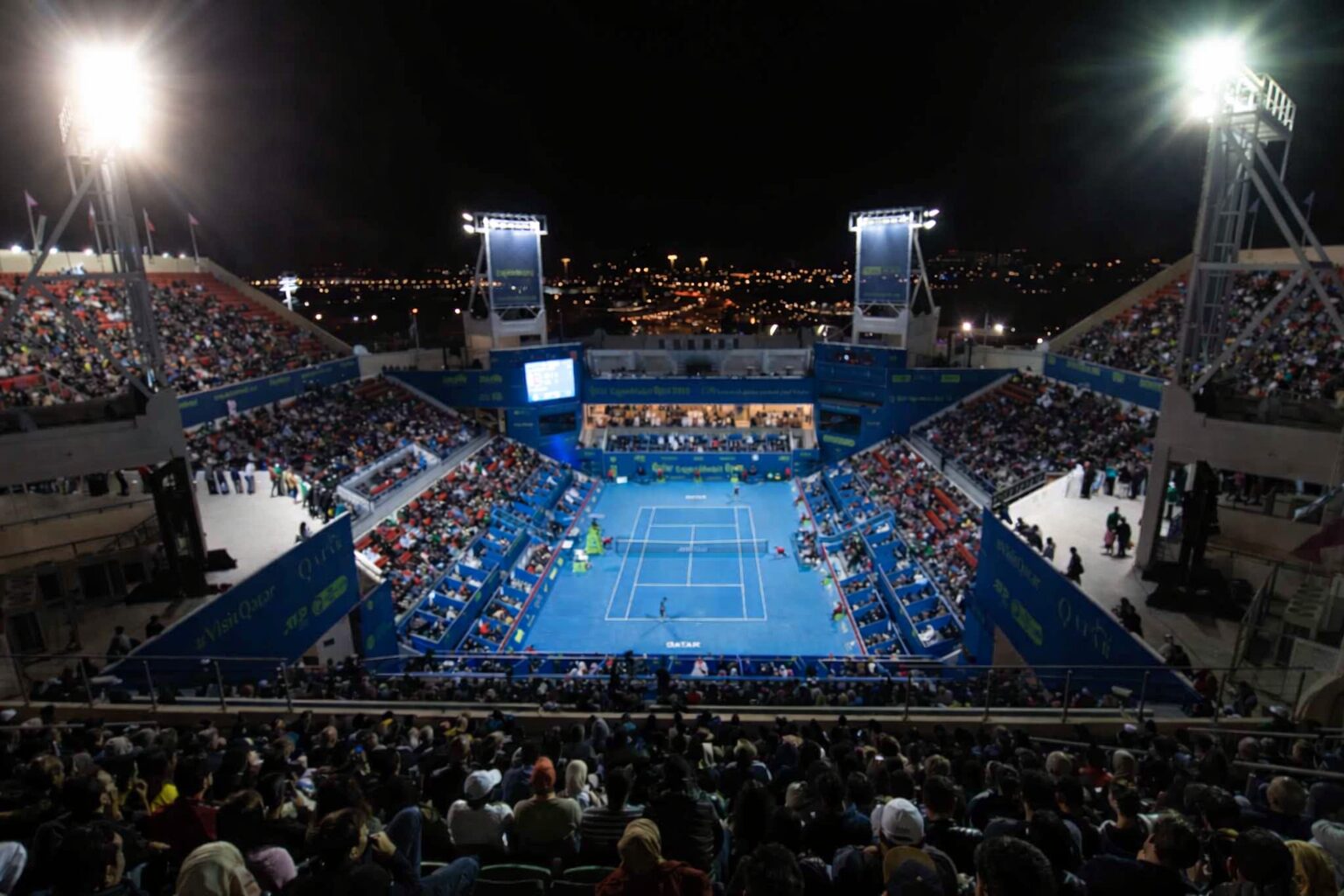
The Qatar TotalEnergies Open 2026 entry list is beginning to take shape in Doha, with defending champion Amanda Anisimova set to return as she looks to successfully defend her 2025 title in one of the strongest WTA 1000 fields of the early season.
Anisimova is expected to be joined in Doha by several of the WTA Tour’s elite, including world No. 1 Aryna Sabalenka, hard-court powerhouse, US Open champion Coco Gauff, and former Wimbledon winner Elena Rybakina, giving the event the feel of a Grand Slam–caliber.
Read on for the Qatar TotalEnergies Open 2026 entry list.
Qatar TotalEnergies Open 2026 Singles Entry List (Subject to Change)
This player list is subject to change until the tournament draw has been published.
- Ekaterina Alexandrova
- Mirra Andreeva
- Amanda Anisimova
- Paula Badosa
- Belinda Bencic
- Lois Boisson
- Jessica Bouzas Maneiro
- Sorana Cirstea
- Jaqueline Cristian
- Leylah Fernandez
- Coco Gauff
- Maya Joint
- Iva Jovic
- Anna Kalinskaya
- Sofia Kenin
- McCartney Kessler
- Madison Keys
- Marta Kostyuk
- Barbora Krejcikova
- Veronika Kudermetova
- Ann Li
- Eva Lys
- Tatjana Maria
- Victoria Mboko
- Elise Mertens
- Karolina Muchova
- Emma Navarro
- Linda Noskova
- Naomi Osaka
- Jelena Ostapenko
- Jasmine Paolini
- Jessica Pegula
- Karolina Pliskova
- Emma Raducanu
- Elena Rybakina
- Aryna Sabalenka
- Liudmila Samsonova
- Diana Shnaider
- Elina Svitolina
- Iga Swiatek
- Clara Tauson
- Marketa Vondrousova
- Dayana Yastremska
- Qinwen Zheng
Betting Context: Reading the Field
Doha plays as a medium-slow hard court, creating a balance where raw serving power is muted just enough to keep matches competitive, while early ball control and return pressure still decide outcomes.
Favorites win often, but they don’t separate easily, which keeps underdogs alive longer than at faster hard-court events, and makes betting game totals more appealing than betting on plus-money dogs.
For bettors, that means:
- Serve dominance is less decisive than in Dubai or indoor events
- Players with shaky serves but strong return games can upset big servers
This is a tournament where match control and patience tend to outperform sheer pace.

For Further Reading
Favorites vs Underdogs — The Big Picture
WTA betting markets consistently reward underdogs more than favorites, especially at short prices. High win percentages often mask poor returns, while lesser-known players quietly generate long-term value.
This section focuses on:
- why win rate does not equal profitability
- where favorites consistently burn units
- how underdogs outperform expectations over full seasons
- Top 25 WTA Underdog Performers — Overall Net Profit (Full Season)
- Best WTA Top 10 Players to Bet On: Who Makes Money for Bettors — and Who Burns It
Together, these results show why WTA betting success is driven more by price discipline and volatility management than by backing the most prominent names.
The WTA Star Tax (Short-Price Reality)
Elite WTA players win a lot of matches — but bettors often overpay for those wins. The “Star Tax” refers to inflated prices driven by reputation, particularly at Grand Slams and early rounds.
This section explains:
- why short-priced favorites (-150 and beyond) underperform
- how public perception skews pricing
- where break-even math quietly fails
The WTA Star Tax refers to the premium bettors pay for elite names, particularly at short prices where the margin for error disappears.
Biggest WTA Betting Upsets
The WTA Tour produces frequent and often extreme upsets, driven by momentum swings, fragile second serves, and matchup volatility. These results are not random — they tend to cluster in specific tournament contexts.
This section highlights:
- the largest WTA underdog wins by odds
- where markets were most wrong
- early-round versus late-round chaos
WTA upsets tend to cluster in the early rounds and at high-profile events, where pricing lags behind matchup reality and momentum swings are magnified.
Most Profitable WTA Players for Bettors
The most profitable WTA players are rarely the most famous. Consistency, pricing discipline, and matchup flexibility matter more than rankings or titles.
This section reframes success:
- from “best players” to “best bets”
- from trophies to unit performance
- from hype to sustainability
- Top 25 WTA Underdog Performers — Overall Net Profit (Full Season)
- Best WTA Top 10 Players to Bet On: Who Makes Money for Bettors — and Who Burns It
Long-term profitability on the WTA Tour is driven by pricing discipline and matchup flexibility, not rankings or title counts.
Bagels, Breadsticks & Market Volatility
Lopsided sets (6–0, 6–1) occur more frequently on the WTA Tour and often distort future pricing. These scorelines exaggerate dominance and create false certainty in subsequent matches.
This section examines:
- why blowouts mislead betting markets
- how momentum gets overvalued
- where regression hits hardest
The WTA Oven: Top 20 Bagel and Breadstick Humiliations on the WTA Tour in 2025

Phil Naessens is a tennis betting analyst and former tennis coach with decades of experience in player development and match analysis. He is the founder of Crush Rush News and host of the Crush & Rush Tennis Podcast, focusing on price-first betting strategy, market efficiency, and transparency in sports wagering.