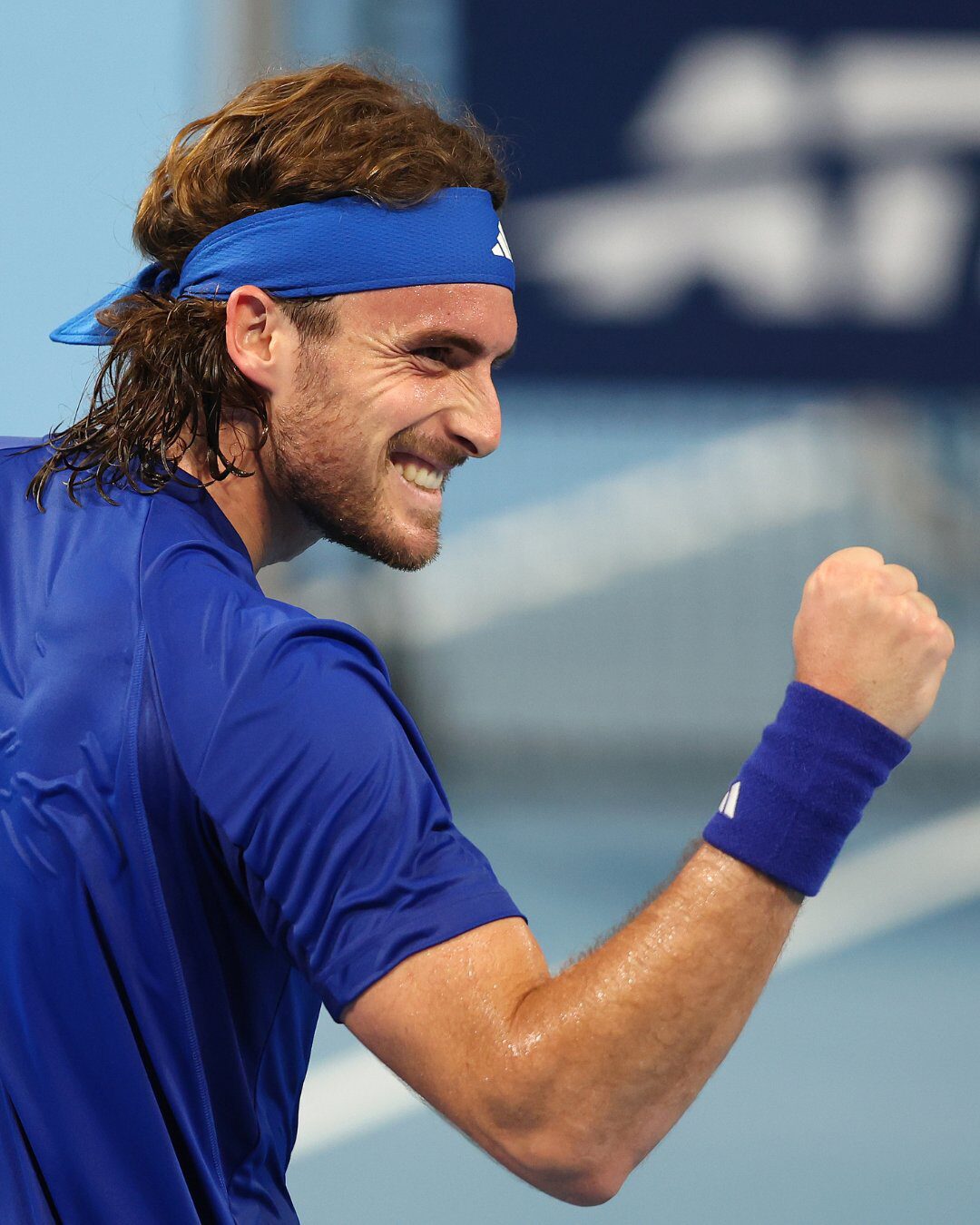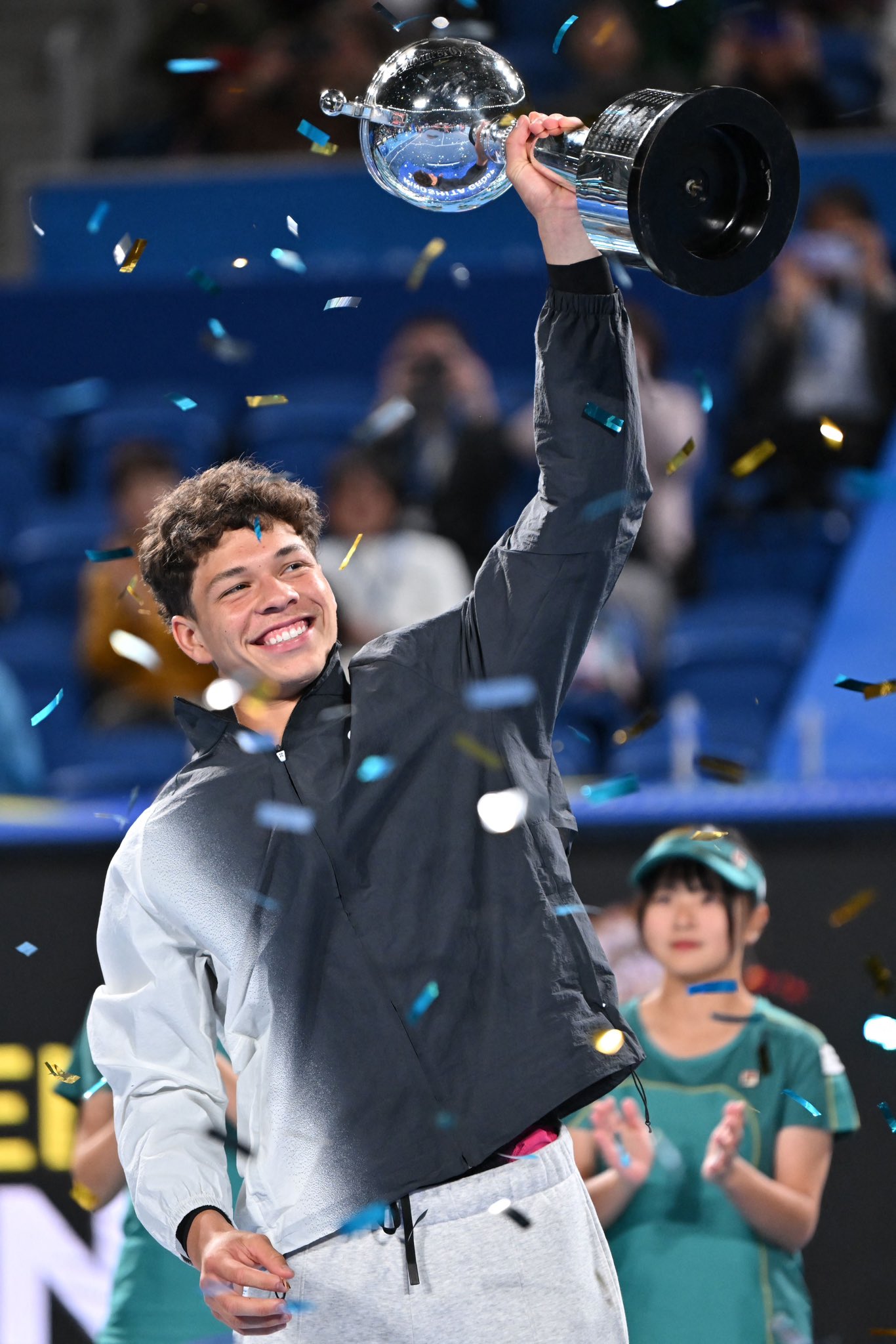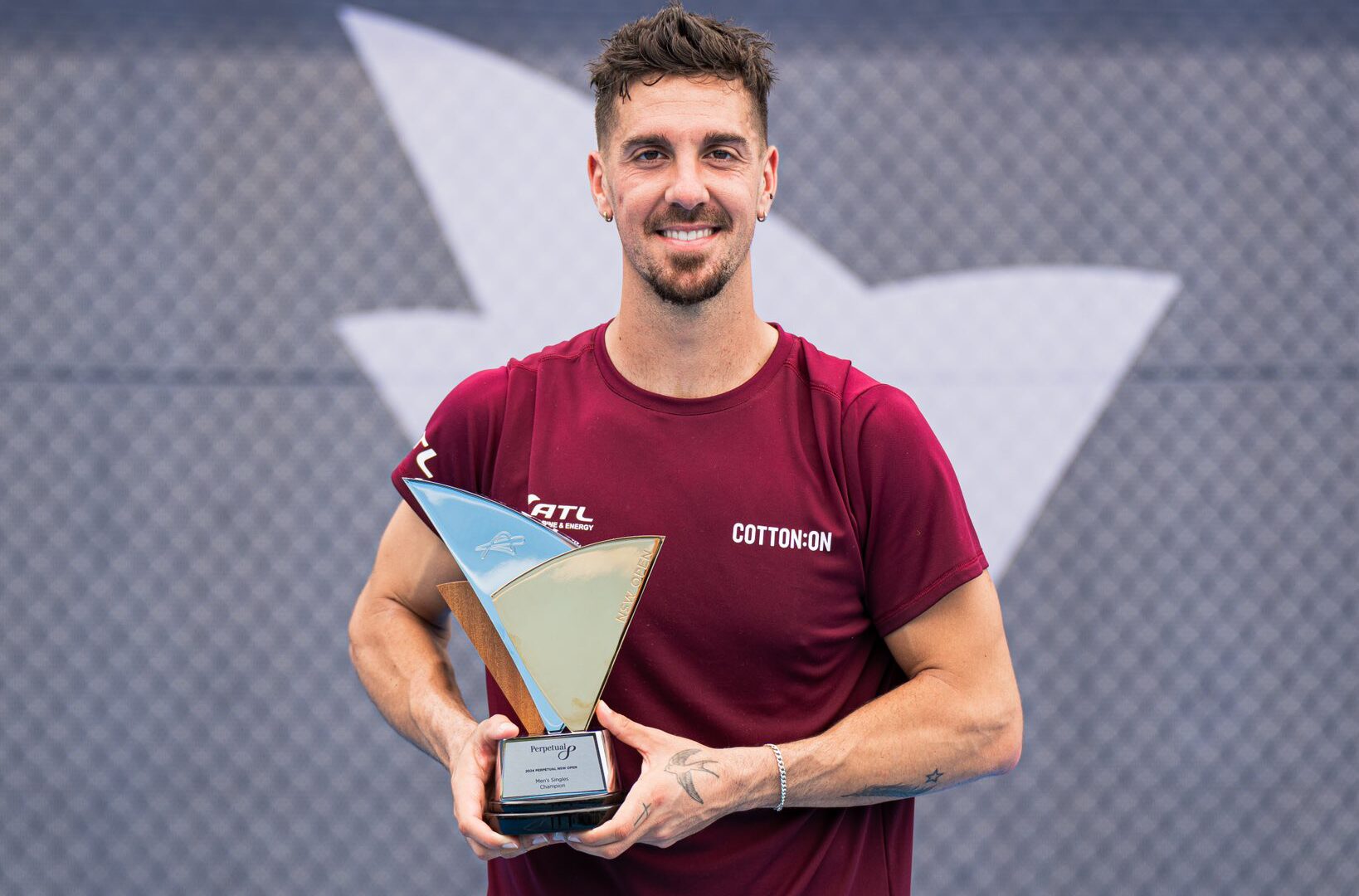
There is no longer any debate about Thanasi Kokkinakis’ level.
The numbers settled that a long time ago.
Across his career on hard courts, Kokkinakis owns a 202–124 record, a 62 percent win rate that places him comfortably at the tour level.
His serve ranks No. 50 all-time on hard courts, a proven weapon across hundreds of matches.
When he reaches finals, he usually finishes the job, posting a 6–2 career finals record, even if most of those titles have come at Challenger level.
The tools work. They always have.
So Adelaide is not about rediscovering form. It is about something far simpler.
Can his body last long enough for his serve to matter?
The Serve Is Good Enough. The Return Is Not.
Kokkinakis does not bleed points on serve. His delivery is efficient, repeatable, and reliable. It keeps him competitive against almost anyone in this field.
The problem is his service return.
His serve keeps him competitive. His return game does not.
He does not generate consistent pressure on opponents’ second serves. Break chances are rare.
Return games often pass without resistance. Sets stay tight. Tiebreaks pile up. Matches stretch longer than his body has historically tolerated.
And before his serve can decide the match, the physical toll accumulates.
That is when the early retirements begin to show up (9), and that is how his week typically ends.
Why the Résumé Skews Challenger
This is not a failure-to-close issue.
His 6–2 finals record makes that clear.
The issue is getting there.
At Challenger level, his elite serve overwhelms lower-ranked players. That pressure carries over into his return games.
Opponents serve under stress more often, second serves appear earlier in games, and Kokkinakis’ return looks better as a result.
The level does not change. The environment does.
At tour level, that advantage disappears. Opponents hold more comfortably, return pressure vanishes, and his own return game is exposed again.
Matches stay tight. Physical load accumulates. Recovery windows shrink quickly.
The clearest indicator is the hardest stat of all. 0–9 in career hard-court matches lost by retirement.
That is not confidence. That is availability.
The Injury History That Shapes Everything
Kokkinakis’ career has never followed a normal developmental arc.
Not because of talent or opportunity, but because his body has repeatedly interrupted momentum.
The pectoral surgery was the last major one.
It required a tendon graft from a donor Achilles tendon, a significant procedure that reset how his upper body absorbs serving load.
That surgery marked the end of the repair phase. There are no more fixes left.
Now we find out whether his body can actually hold.
Before that, the interruptions were constant.
• Multiple shoulder surgeries and recurring shoulder issues
• Elbow and forearm problems linked to serve volume
• Knee injuries that limited movement and match stacking
• Back and lower-body flare-ups that disrupted training blocks
• Extended absences across multiple seasons due to rehabilitation
These were not isolated injuries. They arrived in clusters, often just as his form began to stabilize.
Kokkinakis has rarely broken down at the start of tournaments. His body has usually failed after an accumulated load.
Tight matches. Few breaks. High-stress weeks. Then interruption.
At this point, the question is no longer about recovery. It is about durability.
Why Adelaide Is the Line in the Sand
There is no mystery left in the equation.

The Bottom Line
Kokkinakis has the game. He has the heart. He has the weapon.
Now he has to show he has the durability.
The Adelaide International is where we find out.
Adelaide International. Tournament Facts
Event. Adelaide International
Category. ATP 250
Surface. Outdoor hard court
Location. Adelaide, South Australia
Timing. Final Australian Open warm-up week
Draw. 28 singles, 16 doubles
Balls. Dunlop
Conditions. Medium-fast hard court, typically warm and dry
Scheduling note. Short recovery window before Melbourne travel
What this tournament favors.
• Strong first serves
• Players comfortable in tiebreaks
• Those who can stack matches with limited recovery
What it exposes quickly.
• Durability issues
• Return deficiencies under pressure
• Physical drop-off across consecutive days
This is why Adelaide functions less as a tune-up and more as a diagnostic.
Adelaide International. Entry List
Below is the current main draw entry list for the Adelaide International.
Seeds
- Tommy Paul
- Sebastian Korda
- Tomas Machac
- Jiri Lehečka
- Felix Auger-Aliassime
- Alexander Bublik
- Brandon Nakashima
- Tomas Martin Etcheverry
Direct Acceptances
• Zhizhen Zhang
• Marcos Giron
• Roberto Bautista Agut
• David Goffin
• Miomir Kecmanovic
• Denis Shapovalov
• Arthur Rinderknech
• Roman Safiullin
• Alejandro Davidovich Fokina
• Jaume Munar
• Arthur Cazaux
• Christopher O’Connell
• Aleksandar Vukic
Wild Cards
• Thanasi Kokkinakis
• Tristan Schoolkate
• Li Tu
Qualifiers
• Four players to be determined
For Further Reading
• What Auckland Means to Ben Shelton
• Can Ben Shelton Win a Grand Slam in 2026
• Australian Open 2026 Contenders. Entry Lists and Betting Analysis
• WTA Rising Stars to Watch in 2026
• The Bettor Angle: the Anti-Tout section